
Primary Antibody Matched Pairs


Biotium S100A9(S100A9/1075), 0.2mg/mL
This MAb stains the cytoplasm of macrophages and histiocytes in hematopoietic organs, Kupffer's cells of the liver and Langerhan's cells of the skin. It also stains the mantle zone B-lymphocytes of the lymph node and spleen, spermatogonia, and chief cells of the stomach. S100A9 is expressed by macrophages in acutely inflamed tissues and in chronic inflammation. It is detected in peripheral blood leukocytes, in neutrophils and granulocytes. It is present at sites of vascular inflammation. S100A9 is also expressed in epithelial cells constitutively or induced during dermatoses. S100A9 is a Calcium-binding protein. It has antimicrobial activity towards bacteria and fungi. It is important for resistance to invasion by pathogenic bacteria. It up-regulates transcription of genes that are under the control of NF-kappa-B. S100A9 plays a role in the development of endotoxic shock in response to bacterial lipopolysaccharide (LPS). It promotes tubulin polymerization when unphosphorylate

Biotium S100A9(47-8D3), CF740 conjugate, 0.1mg/mL
This MAb stains the cytoplasm of macrophages and histiocytes in hematopoietic organs, Kupffer's cells of the liver and Langerhan's cells of the skin. It also stains the mantle zone B-lymphocytes of the lymph node and spleen, spermatogonia, and chief cells of the stomach. S100A9 is expressed by macrophages in acutely inflamed tissues and in chronic inflammation. It is detected in peripheral blood leukocytes, in neutrophils and granulocytes. It is present at sites of vascular inflammation. S100A9 is also expressed in epithelial cells constitutively or induced during dermatoses. S100A9 is a Calcium-binding protein. It has antimicrobial activity towards bacteria and fungi. It is important for resistance to invasion by pathogenic bacteria. It up-regulates transcription of genes that are under the control of NF-kappa-B. S100A9 plays a role in the development of endotoxic shock in response to bacterial lipopolysaccharide (LPS). It promotes tubulin polymerization when unphosphorylate
Biotium UGT1A9 (UDP glucuronosyltransferase 1 family, polypeptide A9)(UGT1A9/1229), CF740 conjugate, 0.1mg/mL
This antibody recognizes a protein of about 60 kDa, which is identified as human UGT1A9. It does not cross-react with the other UGT1A isoforms including UGT1A7, UGT1A8, and UGT1A10 and shows a high degree of specificity. UGT1A9 is a UDP-glucuronosyltransferase, an enzyme of the glucuronidation pathway that transforms small lipophilic molecules, such as steroids, bilirubin, hormones, and drugs, into water-soluble, excretable metabolites. This MAb binds to human hepatocytes and the majority of human hepatocellular carcinomas (HCC s). In frozen sections, it stains hepatic cells and may be used as a marker of the liver. This MAb also binds to cell preparations of hepatocellular carcinoma biopsies or cell lines.Primary antibodies are available purified, or with a selection of fluorescent CF Dyes and other labels. CF Dyes offer exceptional brightness and photostability. Note: Conjugates of blue fluorescent dyes like CF405S and CF405M are not recommended for detecting low abund
Biotium S100A9(S100A9/1075), CF740 conjugate, 0.1mg/mL
This MAb stains the cytoplasm of macrophages and histiocytes in hematopoietic organs, Kupffer's cells of the liver and Langerhan's cells of the skin. It also stains the mantle zone B-lymphocytes of the lymph node and spleen, spermatogonia, and chief cells of the stomach. S100A9 is expressed by macrophages in acutely inflamed tissues and in chronic inflammation. It is detected in peripheral blood leukocytes, in neutrophils and granulocytes. It is present at sites of vascular inflammation. S100A9 is also expressed in epithelial cells constitutively or induced during dermatoses. S100A9 is a Calcium-binding protein. It has antimicrobial activity towards bacteria and fungi. It is important for resistance to invasion by pathogenic bacteria. It up-regulates transcription of genes that are under the control of NF-kappa-B. S100A9 plays a role in the development of endotoxic shock in response to bacterial lipopolysaccharide (LPS). It promotes tubulin polymerization when unphosphorylate
Biotium UGT1A9 (UDP glucuronosyltransferase 1 family, polypeptide A9)(UGT1A9/1229), CF647 conjugate, 0.1mg/mL
This antibody recognizes a protein of about 60 kDa, which is identified as human UGT1A9. It does not cross-react with the other UGT1A isoforms including UGT1A7, UGT1A8, and UGT1A10 and shows a high degree of specificity. UGT1A9 is a UDP-glucuronosyltransferase, an enzyme of the glucuronidation pathway that transforms small lipophilic molecules, such as steroids, bilirubin, hormones, and drugs, into water-soluble, excretable metabolites. This MAb binds to human hepatocytes and the majority of human hepatocellular carcinomas (HCC s). In frozen sections, it stains hepatic cells and may be used as a marker of the liver. This MAb also binds to cell preparations of hepatocellular carcinoma biopsies or cell lines.Primary antibodies are available purified, or with a selection of fluorescent CF Dyes and other labels. CF Dyes offer exceptional brightness and photostability. Note: Conjugates of blue fluorescent dyes like CF405S and CF405M are not recommended for detecting low abund
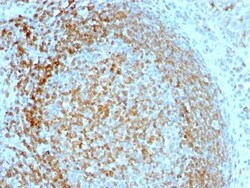
Biotium CD70(TNFS7/1026), CF488A conjugate, 0.1mg/mL
This antibody recognizes a protein of 30 kDa, identified as CD70. It is a cytokine that belongs to the tumor necrosis factor (TNF) ligand family. This cytokine is a ligand for TNFRSF27/CD27. It is a surface antigen on activated, but not on resting, T- and B-lymphocytes. It induces proliferation of co-stimulated T cells, enhances the generation of cytolytic T cells, and contributes to T cell activation. This cytokine is also reported to play a role in regulating B-cell activation, cytotoxic function of natural killer cells, and immunoglobulin synthesis.Primary antibodies are available purified, or with a selection of fluorescent CF Dyes and other labels. CF Dyes offer exceptional brightness and photostability. Note: Conjugates of blue fluorescent dyes like CF405S and CF405M are not recommended for detecting low abundance targets, because blue dyes have lower fluorescence and can give higher non-specific background than other dye colors.
Biotium CD55 (DAF)(F4-29D9), CF740 conjugate, 0.1mg/mL
Recognizes a single chain glycoprotein of 70 kDa, identified as CD55 (also known as decay accelerating factor, DAF). This MAb was clustered in Kobe at the Sixth International Workshop on Human Leukocyte Differentiation Antigens as F429D-9 (N-L120). CD55/DAF is widely expressed on cells throughout the body including leukocytes, erythrocytes, epithelium, endothelium, and fibroblasts. It is a Glycosyl phosphatidylinositol anchored (GPI-anchored) member of the membrane bound complement regulatory proteins that inhibit autologous complement cascade activation. It prevents the amplification steps of the complement cascade by interfering with the assembly of the C3-convertases, C4b2a and C3bBb, and the C5-convertase, C4b2a3b and C3bBb3b. CD55 also serves as receptor for CD97 and for echovirus and Coxsackie B virus. Anti-CD55 can be used as marker for paroxysmal nocturnal hemoglobinuria (PNH).Primary antibodies are available purified, or with a selection of fluorescent CF Dyes and o
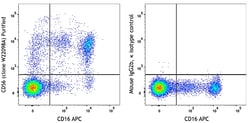
Biolegend Purified anti-human CD56 NCAM
Purified anti-human CD56 (NCAM) [W22098A]; Isotype: Mouse IgG2b, κ; Reactivity: Human; Apps: FC; Size: 100 μg
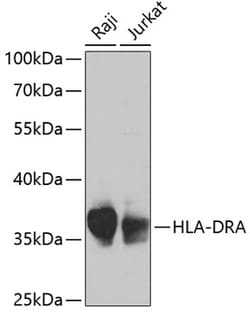
ABclonal Technology HLA-DRA Rabbit pAb

HLA-DRA is one of the HLA class II alpha chain paralogues. This class II molecule is a heterodimer consisting of an alpha and a beta chain, both anchored in the membrane. This molecule is expressed on the surface of various antigen presenting cells such as B lymphocytes, dendritic cells, and monocytes/macrophages, and plays a central role in the immune system and response by presenting peptides derived from extracellular proteins, in particular, pathogen-derived peptides to T cells. The alpha chain is approximately 33-35 kDa and its gene contains 5 exons. Exon 1 encodes the leader peptide, exons 2 and 3 encode the two extracellular domains, and exon 4 encodes the transmembrane domain and the cytoplasmic tail. DRA does not have polymorphisms in the peptide binding part and acts as the sole alpha chain for DRB1, DRB3, DRB4 and DRB5.
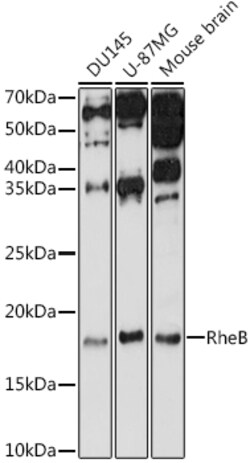
ABclonal Technology RheB Rabbit pAb
This gene is a member of the small GTPase superfamily and encodes a lipid-anchored, cell membrane protein with five repeats of the RAS-related GTP-binding region. This protein is vital in regulation of growth and cell cycle progression due to its role in the insulin/TOR/S6K signaling pathway. The protein has GTPase activity and shuttles between a GDP-bound form and a GTP-bound form, and farnesylation of the protein is required for this activity. Three pseudogenes have been mapped, two on chromosome 10 and one on chromosome 22.

Human SELE ELISA Pair Set 5PP (Sino Biological)
Each vial contains 135 ng of recombinant Human E-Selectin / CD62e / SELE. Reconstitute with 1 mL dilution buffer. After reconstitution, store at -20℃ to -80℃ in a manual defrost freezer. A seven-point standard curve using 2-fold serial dilutions in dilution buffer, and a high standard of 6000 pg/mL is recommended.
Genscript Corporation CD79B hFc Chimera Human
CD79B (also known as B29 Ig beta and B cell antigen receptor complex-associated protein beta-chain) is a 36-40 kDa member of the Ig-Superfamily It is required in cooperation with CD79A for initiation of the signal transduction cascade activated by the B-cell antigen receptor complex (BCR) which leads to internalization of the complex trafficking to late endosomes and antigen presentation Enhances phosphorylation of CD79A possibly by recruiting kinases which phosphorylate CD79A or by recruiting proteins which bind to CD79A and protect it from dephosphorylation

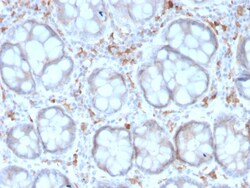
Biotium CD209 / DC-SIGN (Pathogen Receptor on Dendritic Cells)(rC209/1781), CF488A conjugate, 0.1mg/mL
DC-SIGN is a transmembrane receptor that is expressed on the surface of dendritic cells and macrophages. It is involved in the innate immune system and recognizes numerous evolutionarily divergent pathogens ranging from parasites to viruses. The protein is organized into three distinct domains: an N-terminal transmembrane domain, a tandem-repeat neck domain and C-type lectin carbohydrate recognition domain. The extracellular region consisting of the C-type lectin and neck domains has a dual function as a pathogen recognition receptor and a cell adhesion receptor by binding carbohydrate ligands on the surface of microbes and endogenous cells. The neck region is important for homo-oligomerization, which allows the receptor to bind multivalent ligands with high avidity. Primary antibodies are available purified, or with a selection of fluorescent CF Dyes and other labels. CF Dyes offer exceptional brightness and photostability. Note: Conjugates of blue fluorescent dyes like C
Biotium S100A9(S100A9/1075), CF488A conjugate, 0.1mg/mL
This MAb stains the cytoplasm of macrophages and histiocytes in hematopoietic organs, Kupffer's cells of the liver and Langerhan's cells of the skin. It also stains the mantle zone B-lymphocytes of the lymph node and spleen, spermatogonia, and chief cells of the stomach. S100A9 is expressed by macrophages in acutely inflamed tissues and in chronic inflammation. It is detected in peripheral blood leukocytes, in neutrophils and granulocytes. It is present at sites of vascular inflammation. S100A9 is also expressed in epithelial cells constitutively or induced during dermatoses. S100A9 is a Calcium-binding protein. It has antimicrobial activity towards bacteria and fungi. It is important for resistance to invasion by pathogenic bacteria. It up-regulates transcription of genes that are under the control of NF-kappa-B. S100A9 plays a role in the development of endotoxic shock in response to bacterial lipopolysaccharide (LPS). It promotes tubulin polymerization when unphosphorylate
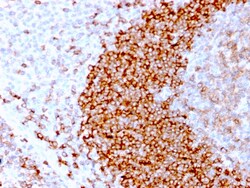
Biotium CD79b (B-Cell Marker)(IGB/3170R), CF594 conjugate, 0.1mg/mL
CD79 (also designated Ig chains, designated CD79B or B29. The B cell antigen receptor complex (BCR) is formed by the association of CD79 with a membrane immunoglobulin, such as IgM or IgD. The membrane immunoglobulins IgM and IgD achieve surface expression and antigen presentation function in response to CD79 association. The cytoplasmic tails of both CD79A and CD79B contain an ITAM (immuno-receptor tyrosine-based activation) motif, which acts to initiate the BCR signaling reactions by binding to and activating tyrosine kinases. Primary antibodies are available purified, or with a selection of fluorescent CF Dyes and other labels. CF Dyes offer exceptional brightness and photostability. Note: Conjugates of blue fluorescent dyes like CF405S and CF405M are not recommended for detecting low abundance targets, because blue dyes have lower fluorescence and can give higher non-specific background than other dye colors.